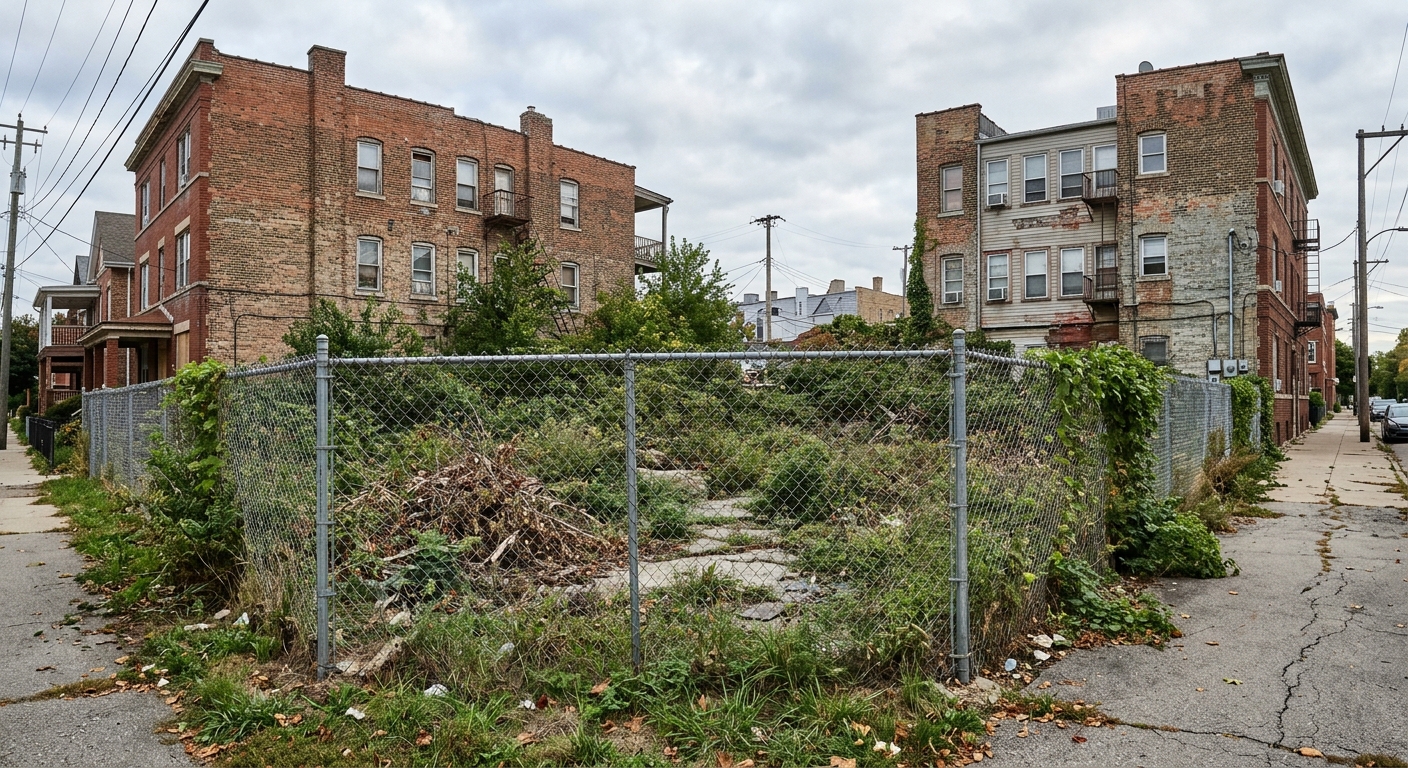
AI-generated illustration; not a photograph of the reported event.
- calendar_today November 6, 2026
Chicago Voters Endorse Vacancy Tax Referendum
Chicago voters have voiced strong support for a new vacancy tax intended to provide critical funding for Chicago Public Schools (CPS). On Tuesday, nearly 74% of voters supported a referendum favoring an annual tax on owners of vacant or undeveloped properties within the city, with the aim of channeling proceeds to CPS. Of the 624,339 ballots cast, approximately 163,655 voters opposed the measure.
Details of the Non-Binding Referendum
The approved ballot question is not binding; for the vacancy tax to take effect, it must first be introduced and then passed by the City Council. The referendum language specified that the tax would apply to owners of "long-term vacant or undeveloped commercial or investment properties," though it did not define the duration required for a property to be considered long-term vacant or specify the tax rate, leaving potential revenue amounts uncertain. CPS is currently facing a significant budget challenge, entering the school year with a $730 million deficit. That shortfall would have been almost $900 million if not for recent property tax increases.
Public Officials and Community Voices React
CPS board members see the referendum as an indication of strong public will to enact the vacancy tax. Debby Pope, a school board member recently re-elected during a closely observed race, commented, "I imagine if [the referendum] got such a good mandate percentagewise … people who are running for election will have to take note." Board member Michilla Blaise, leading the contest in another district, argued that such a tax could address two related issues—generating revenue for CPS and incentivizing the highest and best use of land.
Vacancy Taxes in Other U.S. Cities
Chicago would not be the first major city to implement a vacancy tax. Washington, D.C., started a similar tax in 2011, imposing higher rates on vacant and blighted properties. More recently, Baltimore introduced a vacancy tax in 2024, charging property owners three times the usual property tax rate in the first year after a property is deemed vacant, increasing to four times that rate in subsequent years.
Support and Concerns from Stakeholders
Proponents of the vacancy tax emphasize its potential to discourage speculation and prevent vacant lots from becoming sources of urban blight. Debby Pope, a retired teacher and current CPS board member, noted that vacant lots near schools often become dumping grounds and can be risky for neighbors. "It just disincentivizes people from holding on to them," she said.
However, there are concerns among developers about the effectiveness of such a policy. Scott Henry, CEO of Celadon Partners, warned that imposing fines might complicate development and add to the challenges of doing business in Chicago. He suggested that directing tax increment financing or charging one-time impact fees to developers could be more predictable revenue sources for CPS while encouraging redevelopment.
City Administration's Position and Next Steps
A spokesperson for Mayor Brandon Johnson highlighted ongoing efforts to revitalize underused properties, referencing the city's Missing Middle Infill Housing program, which has facilitated the development of new homes on vacant lots by selling them to developers for $1. The mayor’s office expressed its commitment to leveraging vacant properties to strengthen neighborhoods and create economic opportunities, stating, "We hear what Chicagoans are saying and remain committed to finding ways to put these properties to better use for the people of our city."
While the public has given the vacancy tax a strong mandate, actual implementation will depend on further action by the City Council and development of clear tax policies. The debate over the best approach to addressing vacant properties and funding public schools is likely to continue as city leaders evaluate the next steps.
Source: chicago.suntimes.com.