- calendar_today August 24, 2025
.
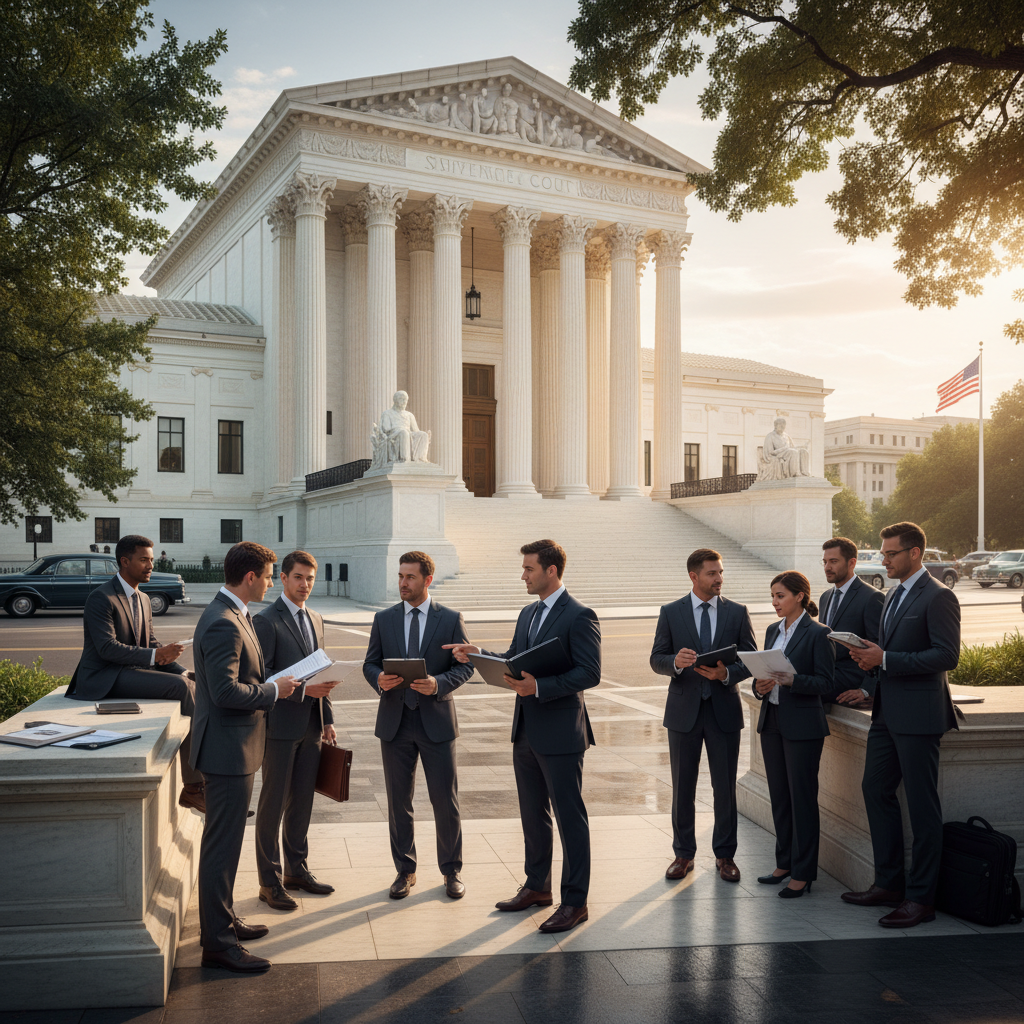
Lawyers for the Trump administration on Tuesday night filed an emergency appeal with the Supreme Court, asking the justices to allow it to block billions of dollars in foreign aid payments that Congress had already approved. The action returns the issue of U.S. Agency for International Development (USAID) funding to the high court for the second time in six months.
The administration is seeking to block nearly $12 billion in aid set aside for USAID, and that must be spent by Sept. 30, when the current fiscal year expires. After returning to office in January, President Donald Trump quickly issued an executive order on his first day back in office ordering the federal government to stop nearly all foreign aid disbursements. Trump said at the time that the move was part of a broader effort to “stop the massive amounts of waste, fraud and abuse” in U.S. overseas spending.
The order was quickly challenged in court, with U.S. District Judge Amir Ali in Washington, D.C., blocking the administration from moving forward in February. Judge Ali ruled that the White House was required to release money for projects Congress had already approved. The ruling from Judge Ali required the Trump administration to restart payments on billions of dollars in USAID grants.
The Trump administration appealed the ruling, however, and last week the U.S. Court of Appeals for the D.C. Circuit revisited the case and reversed Judge Ali’s ruling by a 2-1 margin. Writing for the majority, Judge Karen L. Henderson, an appointee of George H.W. Bush, ruled that the plaintiffs — the foreign aid groups that were seeking to have their grant payments restored — did not have proper legal standing to sue the administration. Henderson, writing for the majority, wrote that the groups lacked a proper “cause of action” under the doctrine of impoundment.
The appeals court’s decision marked a major victory for Trump, but the court has not yet issued a so-called mandate in the case, which means that Judge Ali’s order and the payment schedule he set up remain in place on a technical level. The Trump administration is thus scrambling to try to prevent itself from being forced to disburse the full $12 billion before Sept. 30, when the fiscal year ends.
In its emergency appeal to the Supreme Court on Tuesday, however, the Trump administration made a forceful case for its position, arguing that if the justices do not intervene, the federal government will be forced to “rapidly obligate some $12 billion in foreign-aid funds” before the Sept. 30 deadline. The administration argues that the issue should not be resolved by the federal courts at all.
“The decision instead should be left to the political branches, for Congress did not upset the delicate interbranch balance by authorizing unlimited, unconstrained private suits in such circumstances,” wrote U.S. Solicitor General D. John Sauer, who filed the emergency request with the justices on Tuesday. He added that “any lingering dispute about the proper disposition of funds that the President seeks to rescind shortly before they expire should be left to the political branches, not effectively prejudged by the district court.”
Plaintiffs in the case, however, have taken the exact opposite approach in their argument. A collection of foreign aid groups whose projects are funded by USAID, the plaintiffs are instead arguing that the president does not have the power to unilaterally block the money since Congress has already appropriated those funds. The two key statutes the foreign aid groups are turning to are the Impoundment Control Act (ICA), a law passed in the 1970s that limits executive power when it comes to federal spending decisions, and the Administrative Procedure Act.
The administration previously took the case to the Supreme Court, which issued a narrow 5-4 decision in the administration’s favor back in the spring. With billions of dollars and a Sept. 30 fiscal deadline looming, the justices are now being asked to get involved in the high-stakes battle once again.