
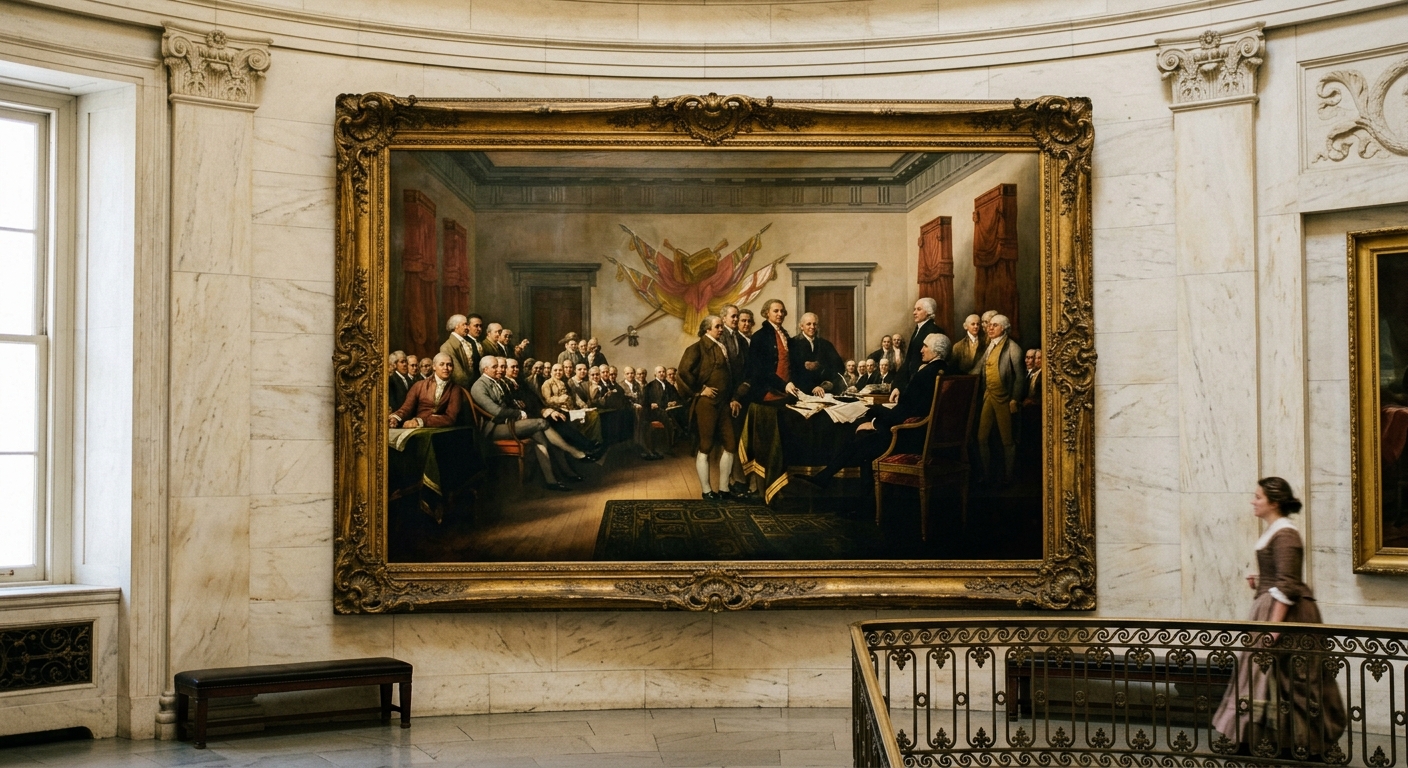
AI-generated illustration; not a photograph of the reported event.
- calendar_today June 26, 2026
The declaration of independence painting by John Trumbull stands as one of America’s most recognizable images, capturing a pivotal moment in the nation’s formation. Even in Illinois, where institutions and schools frequently reference this artwork, its influence serves as a reminder of the ideals that shaped the country’s beginnings.
The Origins of an American Icon
The painting, officially titled “Declaration of Independence,” was commissioned in 1826 to mark the 50th anniversary of the adoption of the historic document. John Trumbull, both artist and historian, was inspired to create this commemorative piece following a conversation with Thomas Jefferson, who himself was one of the key founding fathers and the principal author of the Declaration. Jefferson even provided Trumbull with a rough sketch of Independence Hall, ensuring the setting of the painting was rooted in firsthand recollection.
Depicting the Continental Congress
The painting portrays the presentation of the draft Declaration to the Continental Congress on June 28, 1776, not the widely celebrated July 4 signing. This decision reflected Trumbull’s commitment to capturing the precise moment when the nation’s path was set in motion, rather than its final ratification.
The U.S. Capitol Rotunda: Center Stage for History
Today, the original painting is prominently displayed in the U.S. Capitol Rotunda, a landmark visited by delegates and tourists from Illinois and across the country. The artwork’s presence in the Capitol connects present-day Americans to the American Revolution, making it an enduring focal point for history and civic education.
Artistic Liberties and Historical Accuracy
Despite his meticulous preparations, Trumbull’s painting has provoked discussions among historians about its historical accuracy. Many experts point out the various artistic liberties taken, including the orientation of the delegates and the proportions of the chamber. Since Trumbull never visited Independence Hall prior to painting, he relied on Jefferson’s memory and sketches for details, leading to certain spatial inaccuracies.
Illinois Connections and Educational Impact
For Illinois educators and history institutions, Trumbull’s work remains a teaching tool that both inspires and provokes questions about the relationship between art and history. By examining the contrast between historical record and artistic representation, students can gain deeper insights into the period and the people involved.
Cultural Significance and Preservation
Beyond its placement in the Capitol, another significant version of the declaration of independence painting is preserved at the Yale University Art Gallery. These pieces ensure the legacy of Trumbull’s vision and their symbolic value for both the nation and Illinois communities that routinely integrate these images into public celebrations and classroom study.
Evolving Interpretations
Trumbull revisited his masterpiece, producing a third version that addressed some earlier inaccuracies but largely retained the original composition. These works collectively underscore the importance of critical engagement with historical icons, reminding observers that the past is continuously reinterpreted by each generation.
Conclusion: Enduring Relevance in Illinois
The declaration of independence painting remains as relevant today in Illinois as it was at its unveiling—an artistic bridge between revolutionary ideals and contemporary civic life. Its enduring presence in museums, educational curricula, and public memory ensures that Illinois residents, like their counterparts nationwide, remain connected to the historical moments that shaped America’s destiny.


