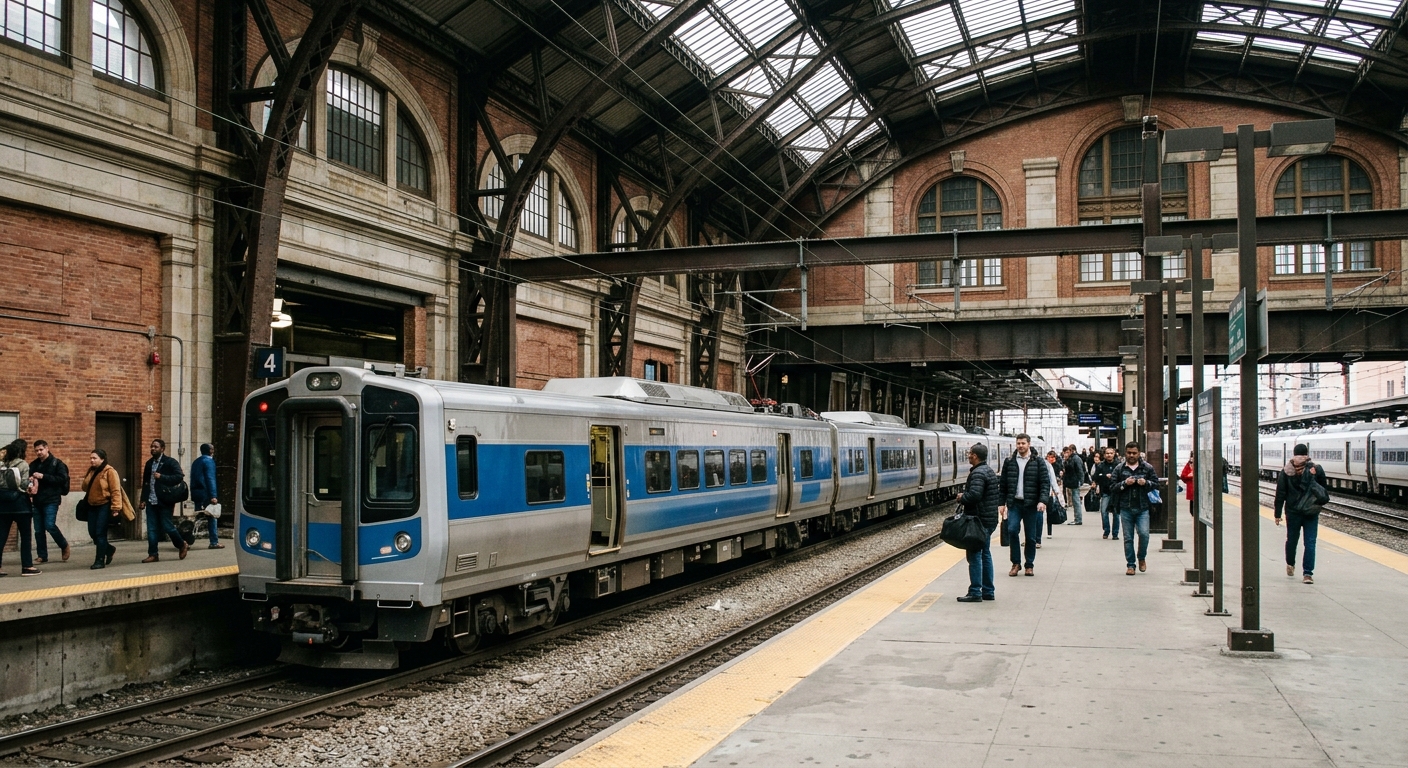
AI-generated illustration; not a photograph of the reported event.
- calendar_today October 14, 2026
Metra Introduces Battery-Powered Train to the Public
Metra took a significant step toward train modernization by unveiling its first battery-powered train for public viewing at LaSalle Street Station in the Loop. The event, held on Wednesday and continuing through 6 p.m. Thursday, marks a milestone: this is the first battery-powered train built for use in North America, with expected passenger service starting in 2028.
New Design and Features on Display
The new train consists of two single-level passenger cars, painted green and blue, connected by a specialized battery car filled with lithium-ion batteries. Each passenger car offers modern seating, luggage racks with coat hooks, several tables for groups of four, and an engineer cab at one end for the train operator. The interiors, reminiscent of spaceship aesthetics from '2001: A Space Odyssey,' provide a futuristic look and feel compared to Metra’s existing fleet, which averages 32 years of age, with the oldest car dating back to 1953.
Battery Car and Safety Features
The connecting battery car features a narrow, brightly illuminated hallway allowing passengers to walk through but restricting loitering, as indicated by posted warnings. This part of the train is crucial for powering the new electric commuter train and showcases advances in train battery technology.
Plans for Public Service in 2028
Metra projects that public rides will commence in March 2028, with the battery-powered train serving the Rock Island line to Blue Island. According to Metra CEO Jim Derwinski, the choice of the 15-mile Rock Island route is strategic: the distance matches the 70-mile range capacity of the battery electric train. This line is also ideal due to its proximity to South Side homes, where the quieter operation and reduced ground vibrations—compared to current diesel locomotives—will be beneficial.
Potential for Expanded Service
Derwinski highlighted that the smaller, zero emission trains could eventually enable more frequent off-peak service, helping meet the evolving demands of commuter rail trains in the Chicago region.
Investment and Train Fleet Upgrade
Metra is investing $234 million to purchase the displayed train and seven additional battery-powered trains, all expected by the end of 2028. When operational, each train set will include two more single-level passenger cars equipped with restrooms, nestled between the two outer engineer-cab passenger cars. This significant investment demonstrates Metra’s commitment to a full train fleet upgrade and aligns with broader efforts to modernize public transportation and introduce zero emission trains.
Stadler and the FLIRT Train Platform
The battery-powered train on display was manufactured by Stadler USA. Stadler’s FLIRT (Fast Light Innovative Regional Train) series includes similar models in Europe, with hydrogen-powered trains in California and diesel versions in Dallas. Although capable of higher speeds, the Metra model is limited to 79 mph, matching current Metra speed regulations.
Next Steps: Testing and Implementation
The displayed train is not yet operational for passengers; it must have its batteries installed before being sent to Colorado for extensive federal testing. Only after successful completion of this process will the train be cleared to enter Metra’s service network.
A Future-Oriented Public Transportation Initiative
The public unveiling was accompanied by remarks from Metra leadership and local officials, emphasizing the significance of train modernization and Metra’s role as a leader in sustainable public transportation. The introduction of this battery powered train underscores ongoing advancements in train battery technology and positions Metra among the first North American agencies to embrace electric commuter trains as part of its future fleet.
Source: chicago.suntimes.com.