- calendar_today August 28, 2025
How KPop Demon Hunters Blended Tradition and Trend to Win Audiences
KPop Demon Hunters has shot to the top of Netflix rankings all over the world since its release in June. K-pop fans were the first to stream the Netflix animated movie, but since then, it has caught the interest of people around the world. The Korean pop-music-inspired fantasy adventure has been streamed more than 33 million times in two weeks and has appeared on Netflix’s global top 10 lists in 93 countries, according to the streamer. It’s now number two on the site’s global list. Fans are already creating fan art for the film, and calls for a sequel are building every day on social media.
Film characters to claim global music chart spots.
In addition to dominating the streaming service, the two fictional all-girl band Huntr/x and the rapping boy band Saja Boys have swept the real music rankings since the film’s premiere on 20 June. The film’s seven songs have outperformed even K-pop superstars BTS and Blackpink, charting on the Billboard Hot 100 and Spotify’s US chart. The film’s two bands hold the top two positions — an incredibly unusual achievement for virtual bands, even ones that are created by existing musicians.
A world tour with superpowers
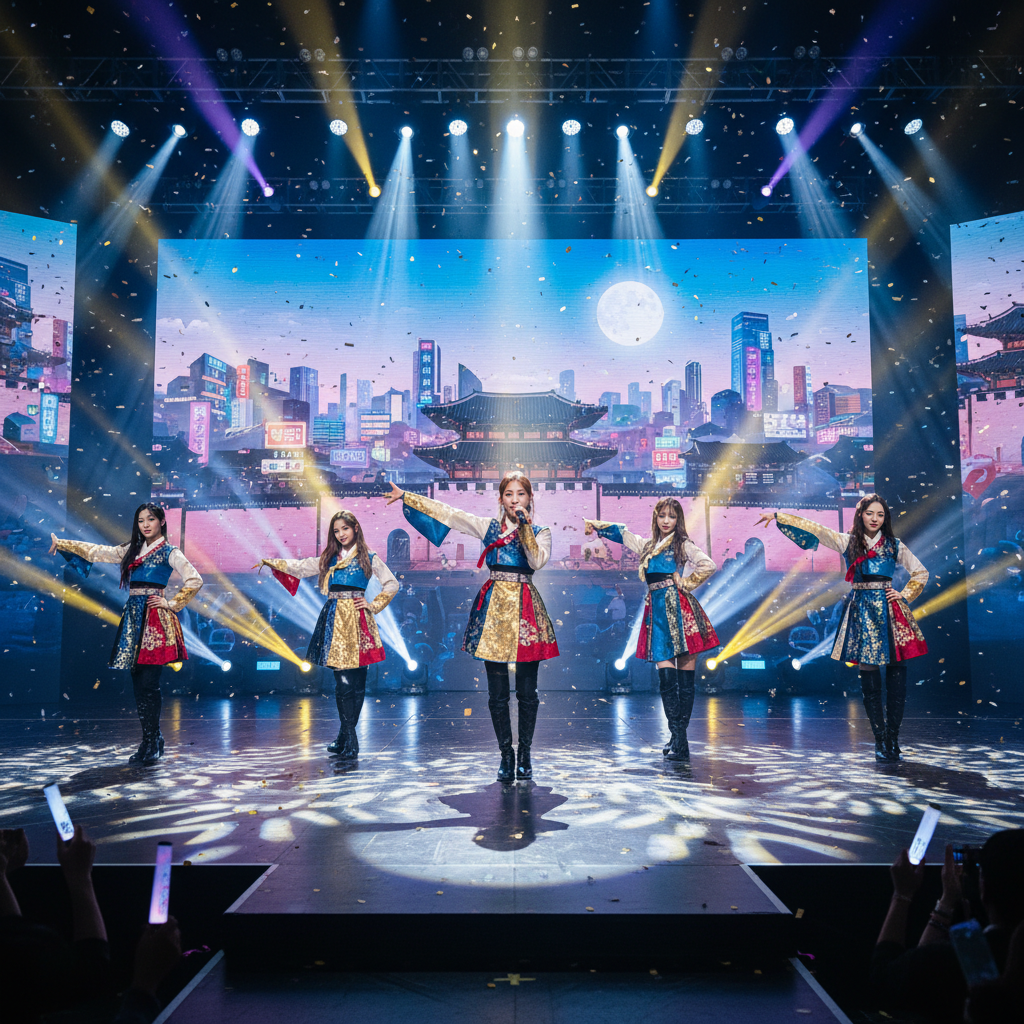
The movie centres on the three members of Huntr/x — Rumi, Mira, and Zoey. When they’re not performing in sold-out arenas or on global tours, the girls fight ghosts and demons to keep the world safe. Their rivals are a group of demon hunters who are not above fomenting trouble. Set to fireworks, flashing lights, and non-stop action, the film follows Huntr/x as they battle the Saja Boys, putting friendship, trust, and self-acceptance at the heart of the story.
A clash of K-pop songs in a film battle
The film is a delightful hybrid that mixes high-energy stage performances, slick fight choreography, and a winning tale about friendship and learning to trust others with your secrets. We laugh, we cry, and we appreciate the messages the main characters receive. Because the narrative weaves between action and music as though it were second nature, the action sequences and fights serve to enhance the plot.
What makes the action worth seeing is the music, though. Drawing from the K-pop stars she knew as a child in her native Seoul, Maggie Kang, who co-directed the film with Chris Appelhans, was a Korean-Canadian. In KPop Demon Hunters, the lyrics and energy of the songs aren’t extraneous — they’re essential to the narrative. In this way, the song serves a double function: keeping the action moving and also repelling evil. As Lashai Ben Salmi, a Korean-culture community leader in Europe, says, “It gives the film a surprising level of maturity.”
Working with K-pop A-listers
Teddy Park, the Blackpink producer, and Grammy-winning Lindgren, who has made songs for BTS and TWICE, are among the Korean label’s creators with whom Kang and Appelhans collaborated on the project. They wrote eight unique songs for the bands in the film that could appear on a K-pop album release. It’s not difficult to believe: The soundtrack’s vibrant colours jump off the screen and its characters. Amanda Golka, a Los Angeles-based content creator who is not usually a follower of K-pop, told Quartz that she is already a fan. “I have been blasting the soundtrack from Spotify every time I’m in the car,” she says. “It’s fascinating how music can be such a universal language.”
Tradition and global trends collide.
The film is also striking for its attention to cultural detail. K-pop songs, Korean television series, and Korean cinema have all had great mainstream success in the US and other Western markets in recent years, but KPop Demon Hunters is expanding on that acceptance. How characters dine, walk around the city, and move around is all common parts of daily life in Korea, including traditional elements like the ancient city walls, Hanuiwon clinics, public bathhouses, and Namsan Tower. “KPop Demon Hunters goes beyond traditional stereotypes and approaches Korean culture in a very balanced way,” Salmi says. “It was refreshing to watch Korean people as Korean people, not as oriental people or foreigners, with not just a single focus, but with an accurate one.”
Studio Grit attended South Korea.
To ensure that these details are accurate, Studio Grit took a field trip to the country. The production team visited South Korea to photograph and take notes. Folk villages, Seoul’s commercial Myeongdong area, traditional and Western-style clothing, and everyday scenes are all represented in the film. The characters’ lip sync in the final film when they sing in English is also based on the Korean way of pronouncing the words in their original tongue. Even if Korean speakers don’t understand the characters’ lines, some of which include Korean language words or song lyrics, the film should feel true to them.
Fans will also notice the representation of K-pop culture in the film’s activities and merchandise. For a sequence in a fan signing, the production team recruited South Korean YouTube vlogger Moon Gut and got stage props from K-pop light stick manufacturers Shn, according to the press release. “Fan-sign events, the flickering of the light sticks, Kalgunmu, or perfectly synched-up dance choreography by idols, Korean-language banners, and merchandise are all staples of kpop fandom,” Golka said. “As such, KPop Demon Hunters paints an accurate picture of fandom that casual viewers will understand and true fans will relate to.”