- calendar_today August 18, 2025
Illinois Shines in North American Soccer’s Global Spotlight
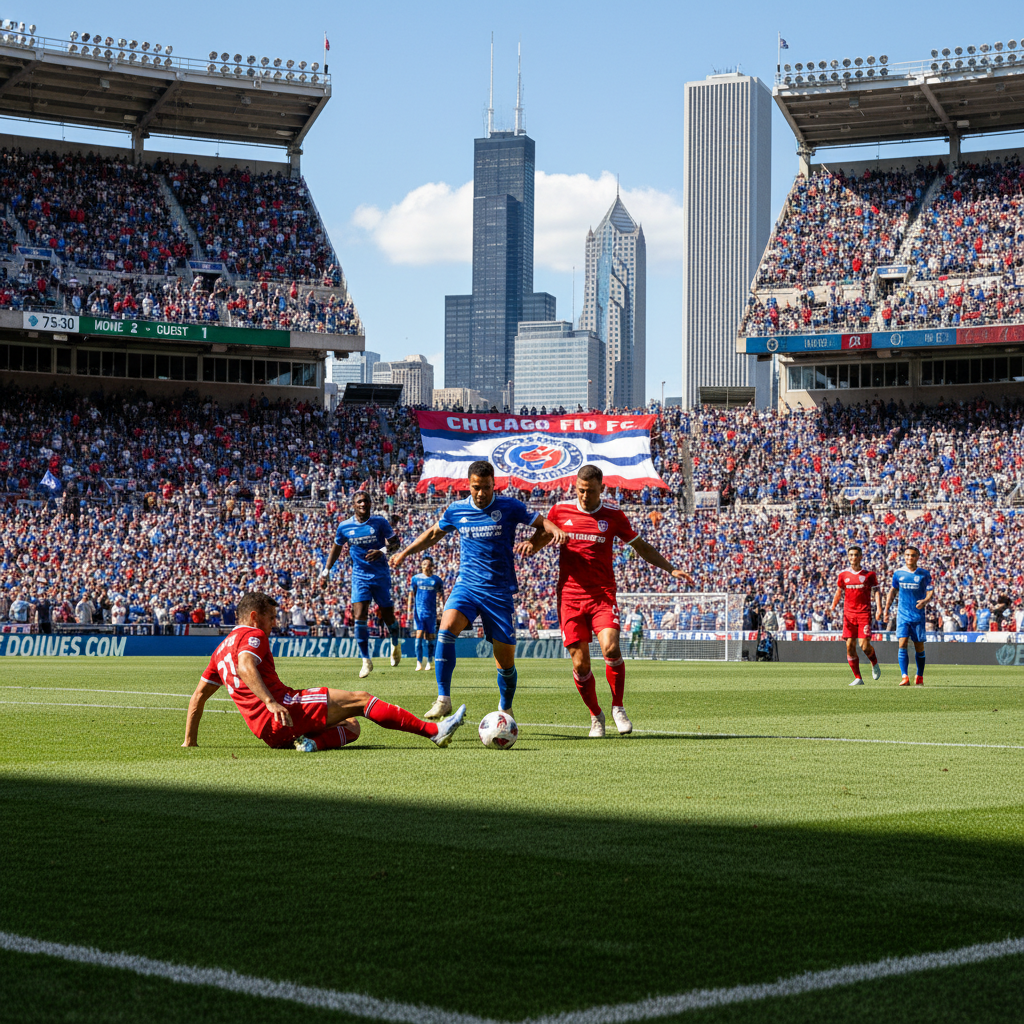
The roar begins as a rumble deep in the concrete foundation of Soldier Field, a primal sound that sends pigeons scattering into the Chicago skyline. Thirty thousand voices unite in a battle cry that echoes across Lake Michigan with the same ferocity that once accompanied Jordan’s Bulls and Ditka’s Bears. This is Chicago Fire country now—at least on this frost-kissed April evening—and the Windy City faithful are making sure the visiting European scouts know exactly what Illinois soccer means. It’s not just passion; it’s Chicago passion—fierce, uncompromising, and loud enough to wake the ghosts of Al Capone himself.
Spring 2025 marks the moment when Illinois soccer stopped being a footnote to the state’s storied sports legacy and became a thundering chapter all its own. From Chicago’s gleaming lakefront to the windswept plains of downstate communities, soccer fever has infected the Prairie State with the relentless intensity of a Chicago winter—harsh, undeniable, and impossible to ignore. The Fire—once struggling for attention in a crowded sports marketplace—have transformed into a tactical juggernaut whose distinctive style mirrors the city itself: gritty, innovative, and occasionally breathtaking in its audacity.
“What’s happening in Illinois ain’t just revolution—it’s a full-blown Chicago takeover,” declares South Side-born analyst Miguel Ruiz, his voice carrying the city’s distinctive cadence as he gestures toward Section 8—the heaving mass of red-scarved supporters who’ve turned matches into religious experiences. “We’re playing with that Chicago edge, that South Side swagger, that ‘we ain’t here for a haircut’ mentality that this city was built on. This isn’t just soccer—this is Chicago soccer, and it hits different.”
The numbers explode off the page like a striker’s shot finding the upper ninety. Youth registration across Illinois has skyrocketed 67% since 2023, with clubs from Wrigleyville to Carbondale reporting waiting lists that stretch months long. The legendary Humboldt Park pickup games have become must-see attractions, drawing lunch-hour crowds who stand transfixed as players blend influences from the city’s kaleidoscopic immigrant communities into a distinctly Illinois style—technically ambitious yet hardworking, creative yet direct, with a defensive resilience that would make the ’85 Bears defensive line nod in gruff approval.
Illinois’ collegiate powerhouses have morphed into soccer factories that European scouts circle like hawks. When Northwestern’s women dismantled defending national champions UCLA 4-1 in that rain-soaked March showdown—goalkeeper Kelly Martinez performing save after impossible save before launching a counterattack that ended with Evanston-born winger Sophia Chen dancing through defenders like a young Lionel Messi—representatives from five European giants nearly came to blows over who would approach her parents first.
“Illinois players bring something that scares European teams in the best possible way,” explains veteran scout Fernando Vega, warming his hands on a coffee cup at a youth tournament in Naperville where teams battle through sideways rain with expressions that could freeze hell itself. “They’ve got this beautiful combination of technical skill and absolute dog mentality. These kids learned to play through lake-effect snow and summer humidity that makes you think you’re breathing through a wet towel. When they hit Europe, nothing rattles them—not the pressure, not the physicality, nothing.”
The Fire’s development academy—constructed on the principles that made the city a global architectural marvel—now forges technically gifted warriors who combine European precision with that distinctly Chicago refusal to back down from anyone. When South Side-raised defender Jamal Washington completed his $16 million transfer to Manchester City in February—shattering records for a player developed entirely in Illinois—taverns from Pilsen to Peoria erupted in celebrations that rivaled the Bulls’ championship parades.
The state’s soccer influence stretches far beyond player development. Chicago-based analytics firms have pioneered revolutionary approaches to performance data that now inform tactics from Liverpool to Leipzig. When the University of Chicago’s Soccer Analytics Lab unveiled their groundbreaking expected threat model—combining machine learning with insights borrowed from the Chicago Mercantile Exchange’s predictive algorithms—it revolutionized how clubs worldwide evaluate transitional play and defensive positioning.
Cultural transformation reveals itself in every neighborhood from Lincoln Park to Little Village. At historic Buddy Guy’s Legends—where blues once provided the only soundtrack—animated debates about formation tactics now compete with guitar riffs. In Bridgeport, where White Sox loyalty runs deeper than family blood, old-timers who once dismissed “that foreign kickball nonsense” now dissect Fire matches with the same intensity they once reserved for analyzing Sox batting orders.
As the 2026 World Cup approaches—with Chicago hosting crucial matches including a Round of 16 clash—Illinois stands as the beating heart of North American soccer’s meteoric rise. In a state that prides itself on no-nonsense work ethic and uncompromising excellence, the beautiful game has found fertile ground, flourishing with a distinctly Illinois character that makes traditional soccer powers both wince and marvel.
The world isn’t just acknowledging Illinois’ soccer awakening—it’s racing to understand how a state once dominated by Bears, Bulls, Blackhawks, Cubs, and White Sox has forged room for soccer passion that burns with nuclear intensity. From Chicago’s lakefront pitches to Southern Illinois’ river-view fields, the state’s soccer transformation thunders forward with unstoppable momentum, powered by the same blend of immigrant dreams and Midwestern determination that built the city’s legendary skyline.
Illinois hasn’t merely joined North American soccer’s global emergence—it’s grabbing the revolution by the collar and dragging it forward with that unmistakable Chicago attitude. The architectural capital of America is now designing soccer’s American future, brick by brick and goal by goal, and the world can only watch in awe as the masterpiece takes shape against the Midwestern sky.