- calendar_today August 15, 2025
.
Erik Menendez was denied parole after more than 30 years in prison this week, a California parole board said. The board determined that Erik, who was found guilty along with his brother, Lyle, for the 1989 double murder of their parents, remains “an unreasonable risk to public safety.”
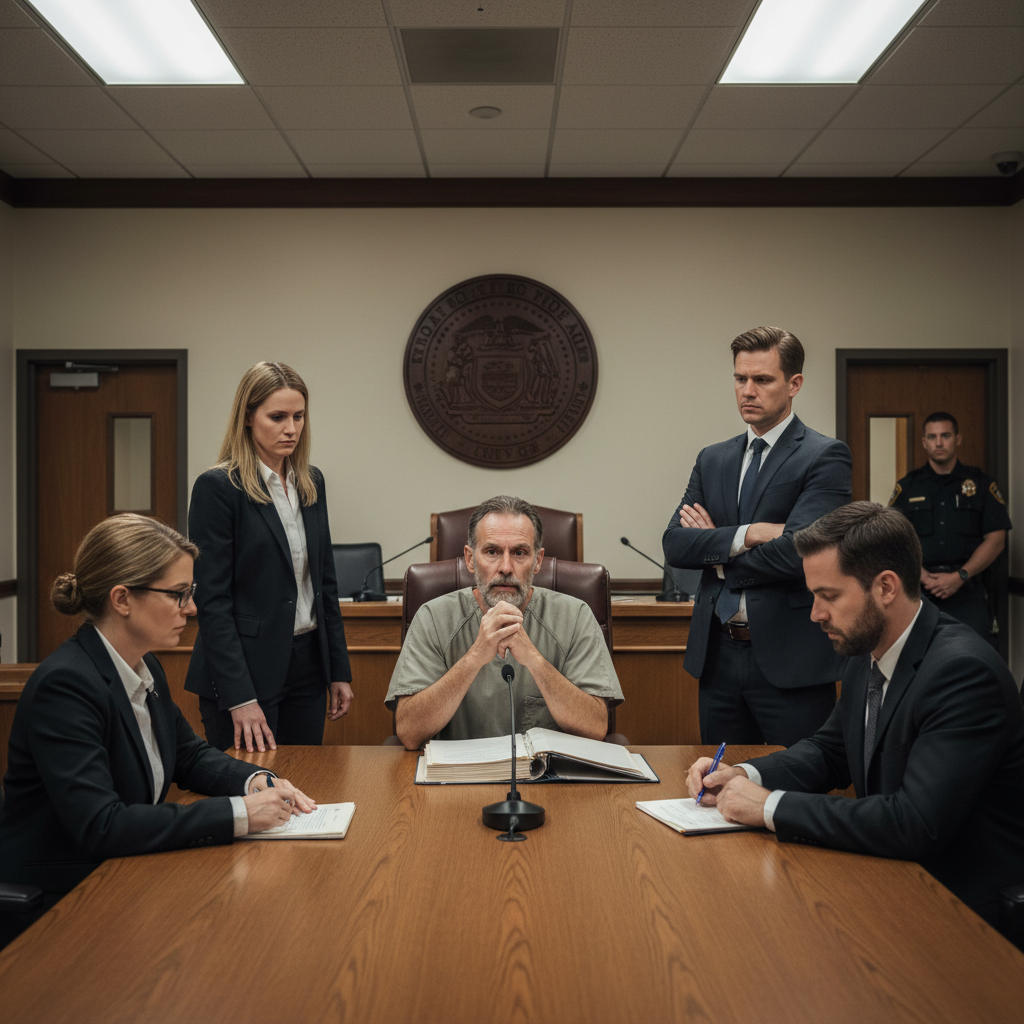
The parole hearing, which lasted just under 10 hours, considered Erik’s rehabilitation and behavior in prison, as well as the pros and cons of his release. The Los Angeles County District Attorney’s office sent representatives who told the board to reject Erik’s parole request, while more than a dozen family members spoke in his favor. The board agreed with the prosecutors’ recommendation, citing Erik’s criminal history as a teenager, the violence of the murders, and “serious violations” during his prison sentence.
Now in his 50s, Erik will have another chance for parole in three years. The Parole Commissioner, Robert Barton, told Erik that the board had not just considered the original crime, but also his behavior behind bars.
“There are many ways one can be a risk to public safety and with many types of criminal conduct, including the ones you were guilty of in prison,” Barton said. “I would encourage you to rely on your great support network to continue to make good decisions and keep you out of trouble.”
Erik has had nine violations of prison rules since his incarceration, including drug possession and having contraband items such as a cell phone and lighter. He has received character letters from several correctional workers who described him as a “model inmate.” But Barton wondered whether that description was truly accurate given his record of infractions. Erik said he had only begun to believe he might get out last year, and that his “consequential thinking” changed.
Family members, some crying, also testified on Erik’s behalf, describing the “decades of pain and division” caused by the murders, but also emphasizing forgiveness. “To say our family has experienced pain does not quite capture what the last 35 years have been like,” Tiffani Lucero-Pastor, great-niece to the brothers’ mother, Kitty, said. “It has divided us. It has caused us panic and anxiety.”
Others argued that Kitty’s inaction to the abuse that the brothers claimed went on in the home had made them fearful. Karen Mae Vandermolen-Copley, Kitty’s niece, said her aunt’s “absence of protection deepened their fear and confusion.” Kitty’s brother, Milton Andersen, was the only known relative to speak against Erik’s parole, but he died earlier this year.
After the decision, the family released a statement. “While we are obviously disappointed, we respect the Parole Board’s decision,” the statement said. “Our belief in Erik remains unwavering. His remorse, growth, and positive impact on others speak for themselves. We will continue to stand by him and hold to the hope that he can return home soon.”
Lyle Menendez to Face Parole Hearing, Governor Holds Final Say
Erik’s brother, Lyle Menendez, will be the next to go before the parole board next week. His parole hearing will take place on Friday, and the board will make a decision based on Lyle’s record in prison and signs of rehabilitation. He has slightly fewer disciplinary violations than Erik, but the violence of the crime may count against him.
In the 1993 trial, Lyle testified that he had shot his parents multiple times with a shotgun at close range. “The manner in which you killed your mother was devoid of human compassion,” Barton said to Lyle this week.
Lyle has also drawn scrutiny over inconsistent descriptions of abuse that he and Erik claimed their father directed against them. At one point, prosecutors said, Lyle asked his girlfriend to tell the police that his father had drugged and raped her. These accusations may factor into the parole board’s decision, despite support from many family members who plan to testify on Lyle’s behalf.
Both Erik and Lyle’s parole hearings came after they were resentenced in May from life in prison to 50 years to life. They are eligible for parole for the first time. The case has been one of the most high-profile murder trials in California history, in large part due to the brothers’ claims that they feared for their lives after years of abuse. Prosecutors have argued that the murders were instead a case of financial gain, given their father’s wealth.
California Governor Gavin Newsom ultimately has the final word on their release. A state law, which was passed in 1988, gives the governor the ability to approve, deny, or modify parole board decisions for anyone convicted of murder and sentenced to an indeterminate term. The decision will be reviewed internally for up to 120 days, after which the governor will have 30 days to act.
Legal experts have said that California governors have historically shied away from granting parole to high-profile defendants. “Every governor is fairly allergic to releasing high-profile defendants,” said Christopher Hawthorne, a Loyola Law School professor. Past governors like Pete Wilson, Gray Davis, and Arnold Schwarzenegger rarely approved parole in those cases, but the past decade of Jerry Brown and Gavin Newsom has reversed that trend, opening the door to parole for many.
The Menendez brothers’ high-profile status, however, could still work against them. “He’s got to balance a whole range of factors,” Hawthorne said. “Public safety, has this person shown real insight into their behavior, et cetera.”
For now, Erik remains behind bars, with his next chance for parole at least three years away. Lyle will soon find out if he’s on a different path—or if both brothers continue serving the life sentences they began more than three decades ago.