- calendar_today August 5, 2025
As the national economy enters a phase of recalibration and resilience in 2025, Illinois’ luxury housing market is undergoing a quiet transformation. Amid macroeconomic shifts, changing buyer priorities, and regional population trends, the state’s high-end real estate sector remains dynamic—especially in and around Chicago, where demand continues to reflect both global interest and local wealth.
Luxury in Illinois is no longer defined solely by lakefront condos or sprawling estates in the suburbs. Today’s affluent buyers seek innovation, wellness, and access—wrapped in turnkey convenience and long-term investment value. From historic Gold Coast residences to new developments in Lincoln Park and Hinsdale, Illinois’ luxury market is adapting to a new set of expectations.
Here are six key predictions for the state’s luxury real estate landscape in 2025.
2024 in Review: Holding Ground Amid Change
Despite a national climate of inflation and rate volatility in 2024, Illinois’ luxury property segment remained relatively stable. Redfin and CoreLogic data show a year-over-year price increase of around 3.7% for the top 5–10% of properties by market value.
While suburban markets such as Naperville, Winnetka, and Oak Brook remained competitive, central Chicago neighborhoods like River North and Streeterville saw consistent buyer interest. Inventory, however, remained tight—particularly for modernized, move-in-ready homes with updated amenities.
1. Price Gains Will Be Modest but Durable
Looking ahead, 2025 is expected to bring price stability to Illinois’ high-end housing market. As inflation slows and the Federal Reserve eyes potential interest rate reductions, well-capitalized buyers are poised to maintain momentum.
Luxury listings in areas like the Chicago Loop, Evanston, and the North Shore suburbs are projected to see price gains of 1%–4%. Modern finishes, energy-efficient design, and strong school districts will remain key value drivers.
2. International Investors Return to Chicago and Beyond
International buyers are once again showing interest in Illinois, especially in Chicago, which continues to offer relative value when compared to coastal markets. Global investors from Canada, the UK, and the Middle East are targeting city-center condominiums and university-proximate investment properties.
According to the National Association of Realtors, foreign investment in U.S. residential real estate grew 12% in Q1 2025. In Illinois, much of this is concentrated near globally recognized institutions like the University of Chicago, Northwestern, and Loyola, where demand for upscale urban housing remains high.
3. Suburban Luxury Gains Momentum
Affluent buyers in Illinois are expanding their search beyond city limits. Upscale suburbs such as Hinsdale, Glencoe, Lake Forest, and Western Springs are seeing growing interest thanks to excellent schools, spacious lots, and enhanced privacy.
This suburban resurgence is driven by professionals embracing remote or hybrid work, families seeking green space, and investors capitalizing on the relative affordability of suburban estates compared to urban penthouses. With better access to outdoor amenities and luxury retail, these areas are quickly becoming prime luxury destinations.
4. Smart Homes and Wellness Features Take Priority
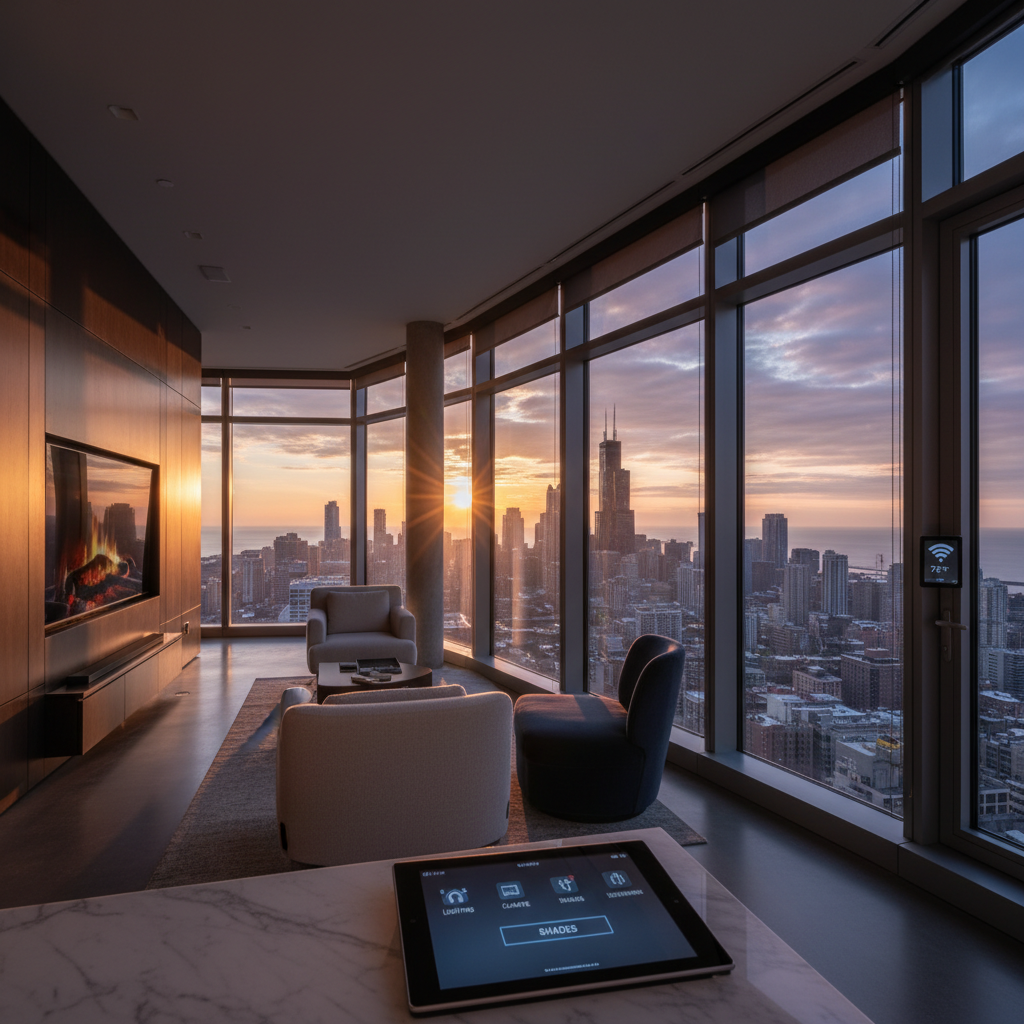
Technology and well-being are no longer optional in Illinois’ luxury market—they’re essential. Buyers now expect homes to be equipped with smart security, climate control systems, and AI-assisted home automation.
At the same time, wellness-focused features such as purified air systems, spa bathrooms, home fitness studios, and even cold therapy options are driving demand. A Realtor.com survey found 67% of U.S. luxury buyers rank wellness features among their top purchasing criteria, and Illinois developers are adapting to this shift with forward-looking upgrades.
5. Inventory Will Stay Tight in Established Neighborhoods
One of the state’s key challenges heading into 2025 is constrained supply in established luxury markets. Prime neighborhoods such as Lincoln Park, Gold Coast, and Lakeview continue to face limited turnover and minimal new development due to zoning, land scarcity, and long permitting timelines.
Sellers are holding onto properties longer, while off-market deals and private listings are increasing, particularly for homes priced above $3 million. This scarcity is expected to sustain upward pressure on values and intensify competition for desirable listings.
6. High-End Rentals Gain Traction in Urban Centers
Luxury rentals are seeing a notable rise in Chicago and nearby commuter hubs. Wealthy individuals seeking flexibility—such as business executives, international professionals, and young tech entrepreneurs—are choosing to lease upscale properties rather than buy.
Monthly rental prices above $12,000 are becoming more common in downtown high-rises, especially those offering concierge services, private elevators, and in-building fitness centers. Developers and investors are taking notice, launching luxury rental towers that mimic the experience of five-star hotels.
What Buyers, Sellers, and Investors Should Expect
As Illinois’ luxury housing market continues to evolve in 2025, participants across the board will need to act with precision. Buyers must move swiftly on well-priced listings. Sellers should focus on enhancing listings with wellness upgrades and energy efficiency. Developers are advised to prioritize quality over quantity and consider smaller-scale, high-impact projects in underserved luxury corridors.
Real estate professionals with a nuanced understanding of buyer psychology, demographic shifts, and global capital flows will remain indispensable in this competitive space.
A Market Rooted in Strategy and Sophistication
Illinois’ high-end real estate sector isn’t chasing explosive growth—it’s embracing refinement. With steady price trends, increasing demand for smart, health-oriented living, and rising interest from both local and international buyers, the market is positioned for durable performance in 2025. In this environment, success will belong to those who anticipate lifestyle-driven evolution and deliver tailored, tech-forward experiences.